
Routty internal XML Format

To standardize the Routty onboarding flow as much as possible a new internal Routty XML format is introduced, which is a variant on the UBL 2.1 format.
This document explains the purpose, scope, and rules of the Routty UBL profile and how to use the attached mapping workbooks to integrate quickly.
Download the most recent version of the Internal XML Format definition here:
Routty Cloud Document Format - V1.3.xlsx
Goals & scope
Provide a stable internal exchange format for our Routty services.
Reduce onboarding time with consistent field expectations.
Clarify required vs. optional elements and business rules.

The internal Routty UBL is designed to be strict where needed (for interoperability) and flexible elsewhere (to support extensions).
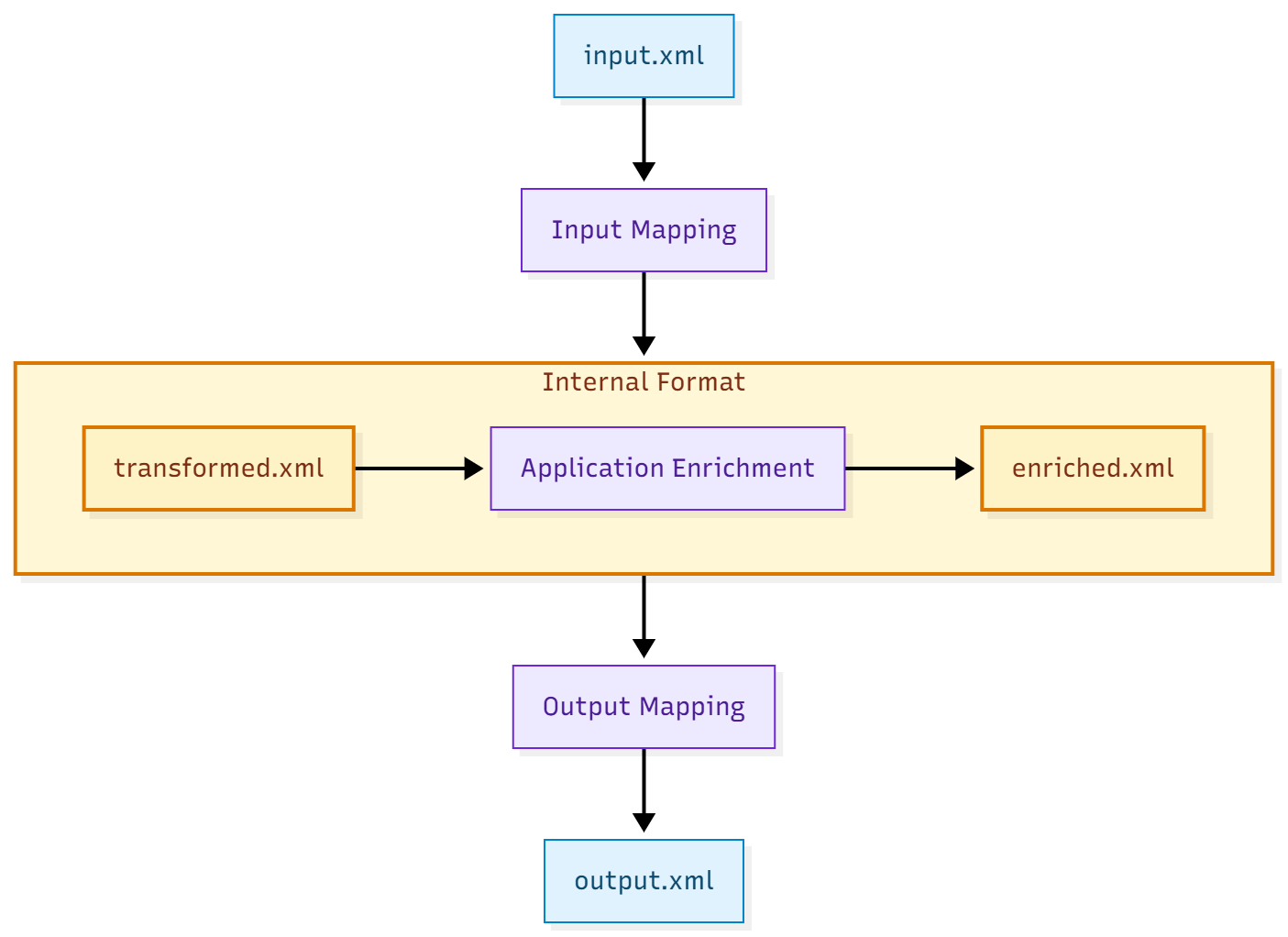
Best practice would be to already use the internal format as the input.xml.
Internal format description
Use the workbook to locate each field and its rules. They define:
Document element: The exact XML XPath of the field.
Data type: String, number (decimal), date, code list, etc.
Description: What the field contains and when it is required.
Default Cardinality: Describes the default UBL2.1 cardinality.
Routty Cardinality: Describes the cardinality as required by Routty Cloud.
Different Cardinality: Describes the cardinality when the internal format is used to communicate with a specific channel (e.g. Peppol, Email, SDI).
Versioning & compatibility
UBL base: 2.1 (https://www.datypic.com/sc/ubl21/ss.html ).
Backward compatibility: Minor versions MAY add optional elements. Major versions MAY change requirements.
Supported document types
Invoice (
Invoice-2)CreditNote (
CreditNote-2)
Changelog
Format Version 1.3
Routty Cloud Document Format - V1.3.xlsx
UBL elements related to the Polish KSeF eInvoicing mandate added
Format Version 1.2
Routty Cloud Document Format - V1.2.xlsx
RouteIdentifier section added in UBLExtensions
Format Version 1.1
Routty Cloud Document Format - V1.1.xlsx
Payment Exchange Rate section added
Format Version 1.0
Routty Cloud Document Format - V1.0.xlsx
Initial version:
Defining Routty Cloud standard
Defining Email standard
Defining Peppol standard